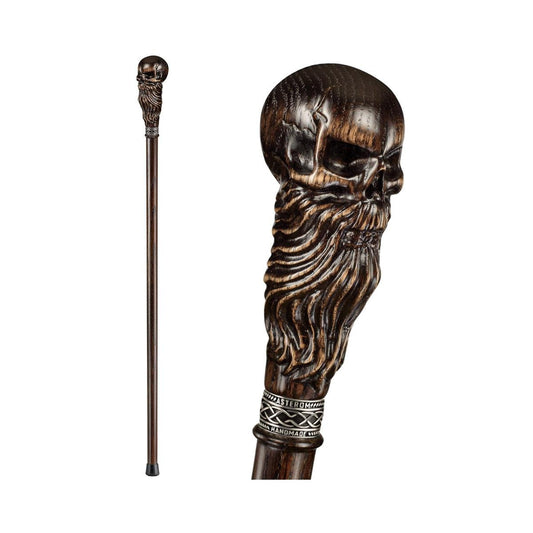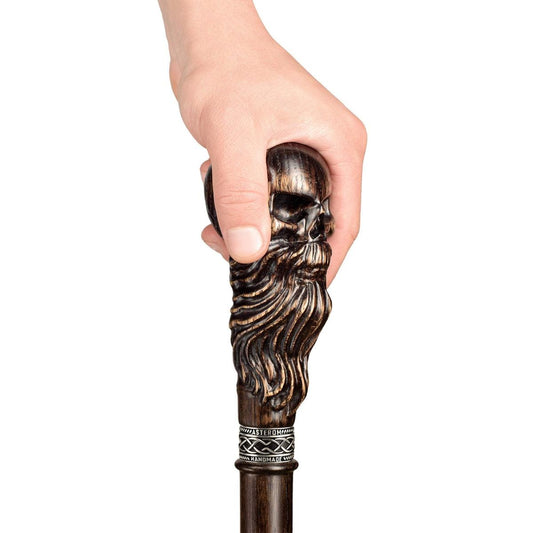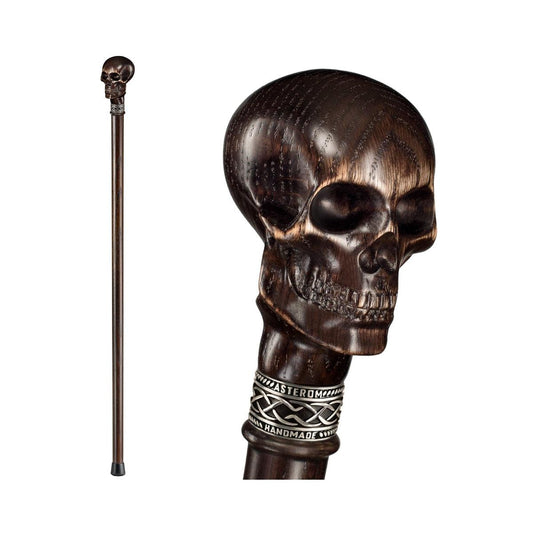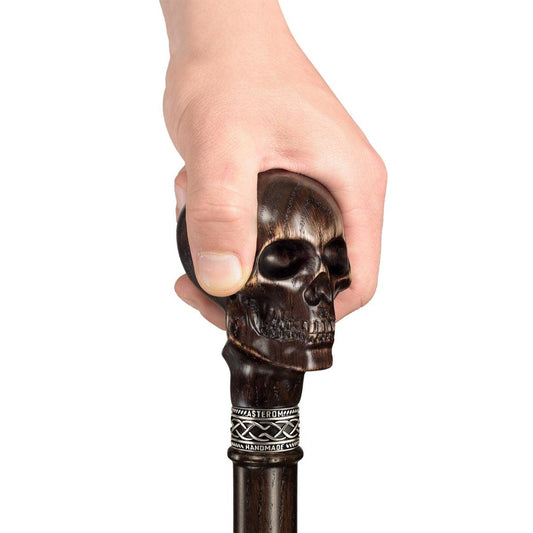

Few everyday objects possess a history as rich and surprising as the walking cane.
For thousands of years, people have relied on staffs and walking sticks while travelling across mountains, forests, villages, and growing cities. They have appeared in the hands of shepherds, pilgrims, kings, philosophers, explorers, military officers, and statesmen. They have symbolized wisdom, authority, craftsmanship, dignity, and personal character long before becoming associated with the Victorian gentleman.
Among collectors and historians, however, one chapter of that history continues to inspire particular fascination.
How did an elegant gentleman's walking cane become associated with self-defence?
The answer is far more nuanced than popular culture often suggests.
Contrary to countless novels and films, respectable Victorian gentlemen were not routinely walking the streets looking for trouble, nor were most walking canes designed as weapons. The overwhelming majority were beautifully crafted everyday companions chosen for comfort, refinement, and personal style. Yet changing fashions, expanding cities, and evolving attitudes toward personal security gradually gave certain walking canes a reputation that has endured for more than a century.
That reputation gave rise to fascinating historical traditions. In Britain, Edward William Barton-Wright introduced Bartitsu, combining Japanese jujutsu with Western boxing, fencing, and walking cane methods into one of history's earliest systems of civilian self-defence. Across the English Channel, France developed the graceful sporting discipline of La Canne. In Ireland, the rugged blackthorn shillelagh became an enduring symbol of national identity, while throughout Europe master craftsmen produced remarkable sword canes that blurred the line between engineering and decorative art.
Together, these stories reveal that the walking cane was never simply a piece of wood. It reflected the society that carried it. Fashion shaped its appearance. Craftsmanship defined its quality. Etiquette influenced how it was used. History gave it meaning.
This article explores that forgotten history—not as a guide to self-defence, but as a journey through the remarkable evolution of one of humanity's oldest and most enduring companions. Along the way, we'll meet Victorian gentlemen, pioneering martial artists, master craftsmen, military officers, celebrated authors, and statesmen who all contributed to the walking cane's extraordinary legacy.
From ancient travellers carrying simple wooden staffs to the polished canes of the Victorian era, from the elegant halls of Bartitsu to the blackthorn hedgerows of Ireland, this is the story of how an everyday object became one of history's most fascinating cultural icons.
Contents
- Walking Before Canes: The Ancient Story of the Staff
- From Sword to Cane: How Elegance Replaced Steel
- Victorian London: Why Gentlemen Rarely Left Home Without a Cane
- Bartitsu and the Rise of the Self-Defence Walking Cane
- La Canne: France's Elegant Art of the Walking Cane
- The Irish Blackthorn Shillelagh
- Sword Canes: The Elegant Mystery Hidden in Plain Sight
- The Art of Building a Walking Cane
- Walking Sticks of Authority
- Famous Figures Who Made the Walking Cane Iconic
- Conclusion
- Frequently Asked Questions
The Evolution of the Walking Cane
The walking cane did not emerge overnight. Its history spans thousands of years, evolving from a simple travelling staff into one of history's most recognizable symbols of craftsmanship, status, and personal character.
| Period | Development |
|---|---|
| Ancient Civilizations | Wooden staffs used by shepherds, rulers, travellers, philosophers, and military leaders throughout Egypt, Greece, Rome, and beyond. |
| Middle Ages | Pilgrims, merchants, and explorers rely on sturdy walking staffs during long journeys across Europe. |
| Renaissance | Walking staffs become slimmer and more decorative as European fashion begins to influence cane design. |
| 17th–18th Century | Civilian swords gradually disappear from everyday dress while elegant walking canes become symbols of refinement. |
| Victorian Era | The gentleman's walking cane reaches its golden age as an everyday accessory, reflecting fashion, etiquette, and craftsmanship. |
| 1898 | Edward William Barton-Wright introduces Bartitsu, forever linking the walking cane with one of history's earliest civilian self-defence systems. |
| Modern Day | Handcrafted walking canes continue to be appreciated for their artistry, history, collectability, and timeless craftsmanship. |
Walking Before Canes: The Ancient Story of the Staff
Long before the walking cane became associated with Victorian gentlemen, personal protection, or the elegant streets of London, there was the walking staff. Simple in form yet remarkably versatile, it accompanied humanity for thousands of years, earning a place beside shepherds, pilgrims, rulers, merchants, and travellers long before it became a symbol of refinement.
The connection between walking canes and self-defence often surprises modern readers. Today, a cane is more commonly associated with mobility, craftsmanship, or personal style than protection. Yet history tells a far more complex story. For thousands of years, people instinctively carried sturdy wooden staffs whenever they travelled. Their primary purpose was never combat, but they provided confidence, stability, and reassurance in an unpredictable world where journeys were often long, roads were poor, and help could be many miles away.
Unlike many ancient tools that disappeared as technology evolved, the walking staff endured because its usefulness never faded. A well-chosen length of hardwood could steady a traveller across rocky ground, help navigate muddy paths, test uncertain footing before crossing streams, or simply reduce fatigue during a long day's walk. It required no complicated craftsmanship to be effective, yet it proved valuable in almost every landscape and every climate.

A Companion Across Civilizations
The remarkable history of the walking staff stretches across nearly every great civilization. Ancient Egyptian artwork frequently depicts officials and rulers holding ceremonial staffs that symbolized authority and leadership. Greek philosophers were often portrayed carrying walking sticks while teaching or travelling, while Roman writers described staffs as common companions for merchants, scholars, and older citizens moving through busy cities.
Although these cultures developed independently, they all arrived at the same conclusion: a walking staff was one of the simplest and most practical objects a person could carry. Its value lay not only in physical support but also in the quiet confidence it provided to those travelling far from home.
This universal appeal explains why the walking staff appears repeatedly throughout history. It belonged equally to shepherds tending livestock, traders crossing continents, messengers delivering royal decrees, and rulers carrying ornate sceptres that evolved from the same basic form. Few everyday objects have served such a wide variety of purposes for so many generations.
The Pilgrim's Road
During the Middle Ages, the walking staff became inseparable from the image of the pilgrim. Every year, thousands of men and women journeyed on foot to sacred destinations such as Canterbury, Rome, and Santiago de Compostela. These journeys could last weeks or even months, leading travellers across mountains, forests, rivers, and unfamiliar roads.
The pilgrim's staff offered practical support over difficult terrain while becoming an instantly recognizable symbol of faith and perseverance. Medieval manuscripts, paintings, and church carvings almost invariably depict pilgrims carrying long wooden staffs beside their satchels and broad-brimmed hats. Over time, the staff came to represent endurance, humility, and the determination to complete a difficult journey.

Importantly, the staff was never reserved solely for pilgrims. Merchants crossing Europe, physicians travelling between villages, scholars moving from one university to another, and local officials conducting business all relied upon sturdy walking sticks as dependable travelling companions. In an age when most journeys were made on foot, carrying a staff simply made sense.
From Necessity to Elegance
As Europe entered the Renaissance, the walking staff gradually began another transformation. Expanding trade, growing cities, and rising prosperity created a new class of gentlemen who viewed personal appearance as an expression of education, refinement, and success. Functional travelling staffs slowly evolved into slimmer, more elegant walking canes designed not only for practical use but also for fashionable display.
Master craftsmen began selecting hardwoods prized for both beauty and durability. Oak, ebony, walnut, and imported woods from overseas trade routes were carefully shaped and polished before being fitted with decorative handles crafted from silver, horn, ivory, or carved wood. What had once been a simple travelling aid became a work of craftsmanship.

Yet despite their growing elegance, these early canes never lost their practical purpose. European streets remained uneven and crowded. Cobblestones became slippery in wet weather, roads were often muddy, and daily life still involved far more walking than it does today. A finely crafted cane reflected its owner's taste while continuing to provide the same reassurance that wooden staffs had offered travellers for thousands of years.
The Beginning of a New Reputation
By the close of the Renaissance, the walking stick had already lived many lives. It had served shepherds and kings, pilgrims and philosophers, merchants and magistrates. It had become both a useful everyday companion and a symbol of refinement.
What it had not yet become was an object closely associated with personal protection.
That reputation would emerge much later, shaped not by ancient warfare but by profound changes in European society. As civilian swords gradually disappeared from everyday life during the seventeenth and eighteenth centuries, gentlemen sought a new companion—one that reflected civility rather than violence while still offering confidence in an increasingly crowded and unpredictable world.
That quiet transition, from sword to cane, marks the beginning of the story that would eventually give rise to Bartitsu, La Canne, and the enduring historical connection between walking canes and self-defence.
From Sword to Cane: How Elegance Replaced Steel
History rarely changes overnight. The walking cane did not suddenly replace the sword, nor did gentlemen abandon centuries of tradition in a single generation. Instead, one of Europe's most recognizable symbols of status gradually gave way to another, reflecting a society that increasingly valued civility over confrontation.
For centuries, a gentleman's sword was as much a statement of social standing as it was a practical possession. During the Renaissance and into the seventeenth century, rapiers and later smallswords became standard attire among Europe's educated and wealthy classes. They were worn to court, carried through city streets, and displayed as visible signs of honour, education, and rank.
Unlike the heavy battlefield swords of the medieval knight, these civilian weapons were designed for everyday wear. A finely crafted smallsword complemented fashionable clothing in much the same way that a tailored coat or an elegant pocket watch would in later centuries. To appear without one could suggest a lack of status or refinement.
Yet Europe itself was changing.
As cities grew larger and governments became stronger, attitudes toward public violence began to shift. Throughout the seventeenth and eighteenth centuries, authorities across Europe increasingly discouraged civilians from carrying weapons in crowded urban centres. Although duelling persisted among some social circles, it became more heavily regulated, while many cities introduced restrictions intended to reduce public disorder.
The transformation was gradual rather than sudden, but its effects were profound. The gentleman's image evolved alongside changing ideas of civility. Increasingly, true confidence was measured not by visible weaponry but by composure, education, and good manners.

The Rise of the Walking Cane
As swords slowly disappeared from everyday civilian dress, another accessory quietly assumed their place.
The walking cane offered something remarkably different. It projected refinement without aggression, practicality without compromise, and individuality without unnecessary display. Carried naturally through the streets of London, Paris, Vienna, or Edinburgh, it became one of the defining accessories of the European gentleman.
As the walking cane evolved into a symbol of refinement, it also became one of the defining accessories of the well-dressed gentleman. If you're interested in that remarkable transformation, you may also enjoy our article, The Gentleman's Cane: How Walking Sticks Became a Symbol of Status, which explores how the cane became an icon of fashion, etiquette, and personal character.
This transition was driven by more than fashion alone. Daily life in eighteenth-century cities still involved considerable walking. Streets were frequently uneven, poorly drained, and crowded with pedestrians, horses, wagons, and market stalls. A sturdy walking cane remained genuinely useful while blending seamlessly into polite society.
Unlike a sword, a cane attracted little attention. It accompanied its owner into churches, coffee houses, theatres, libraries, gentlemen's clubs, and places of business without appearing out of place. It was practical enough for everyday use yet elegant enough to reflect personal taste.
Craftsmanship Becomes a Statement
As demand increased, cane makers elevated their craft to extraordinary levels. Fine hardwoods such as ebony, rosewood, walnut, and imported Malacca were selected for their beauty, strength, and durability. Skilled artisans fitted these shafts with silver, gold, ivory, horn, porcelain, and carved wooden handles that reflected the wealth and personality of their owners.
Some gentlemen preferred understated simplicity—a perfectly balanced cane whose polished grain spoke for itself. Others commissioned elaborate designs featuring classical mythology, family crests, animals, or finely engraved precious metals. Walking canes became deeply personal possessions, often accompanying their owners for decades.
By the late eighteenth century, owning more than one cane was not unusual among affluent gentlemen. Just as different hats or coats suited different occasions, canes varied according to season, setting, and personal style.
Historical Perspective
The vast majority of walking canes carried during the eighteenth and nineteenth centuries were simply elegant everyday accessories. While history later associated certain canes with personal protection, most were valued primarily for their craftsmanship, practicality, and ability to complement a gentleman's appearance.
The Gentleman Without a Sword
The disappearance of the sword did not diminish the gentleman's presence. If anything, it encouraged a new definition of confidence. Courtesy, restraint, and quiet authority increasingly replaced overt displays of armed status. The walking cane embodied these changing ideals perfectly.
Portraits from the eighteenth and early nineteenth centuries frequently show politicians, merchants, scholars, artists, and landowners standing beside beautifully crafted canes. They are rarely presented as weapons. Instead, the cane appears as a natural extension of the gentleman himself—an object that communicated dignity, experience, and refined taste.
Yet history has a way of assigning new meanings to familiar objects.
As the Industrial Revolution transformed Britain during the nineteenth century, cities expanded at an unprecedented pace. Millions of people moved into rapidly growing urban centres, where crowded streets, uneven policing, and rising concerns about crime created new anxieties for respectable citizens.
The walking cane remained an elegant accessory, but in Victorian London it gradually acquired another reputation—one rooted not in fashion, but in the realities of city life. It is here, among the foggy streets, gas lamps, and bustling avenues of the British Empire's capital, that the story of the self-defence walking cane truly begins.
Victorian London: Why Gentlemen Rarely Left Home Without a Cane
By the late nineteenth century, no city on Earth rivalled London. It was the capital of a vast empire, a centre of finance and innovation, and home to more than six million people. Elegant boulevards, exclusive gentlemen's clubs, grand theatres, and fashionable shopping districts stood only a short distance from overcrowded streets where poverty and crime remained an unavoidable part of everyday life.
It was within this remarkable contrast that the walking cane acquired the reputation it still carries today.
To understand why, it is important to set aside the popular image created by modern films and novels. Victorian London was not a city where respectable gentlemen walked the streets expecting nightly confrontations. Most never experienced serious violence at all. Yet like every great city of its time, London demanded awareness. Pickpockets worked crowded railway stations, thieves operated in poorly lit streets, and newspapers regularly reported robberies, assaults, and disturbances in neighbourhoods both wealthy and poor.
For those who conducted business after dark or travelled regularly on foot, confidence and preparedness were valued qualities. The walking cane, already an accepted part of a gentleman's wardrobe, naturally became part of that sense of reassurance.

A City Built for Walking
Unlike today, Victorian London was experienced almost entirely on foot. Even wealthy citizens who owned private carriages walked considerable distances each day between railway stations, offices, restaurants, clubs, and theatres. Businessmen crossed the City of London on foot. Barristers walked between the Inns of Court. Members of Parliament strolled from Westminster to nearby clubs, while shoppers spent entire afternoons exploring the expanding department stores of the West End.
A walking cane was therefore more than an accessory. It was part of daily life.
Period photographs, fashion illustrations, and portrait paintings consistently show gentlemen carrying canes of every style imaginable. Some were slim and understated. Others featured silver handles, carved animal heads, polished hardwood shafts, or decorative ferrules. A gentleman often selected his cane with the same care he devoted to choosing his hat, gloves, or overcoat.
Owning multiple canes was common among affluent Victorians. Different occasions called for different styles. A formal evening at the opera might warrant an elegant ebony cane with a silver handle, while a country walk or a day's travel called for something sturdier and more practical.

The Cane as a Symbol of Confidence
The Victorian gentleman valued composure above all else. Good manners, measured speech, and self-control defined respectability. The cane reflected these ideals perfectly. It was carried naturally rather than displayed, complementing its owner's appearance without demanding attention.
Etiquette books of the period devoted surprising attention to how a gentleman should conduct himself in public, including the proper way to carry a walking cane. Excessive gestures or theatrical flourishes were considered poor form. Elegance was measured through restraint.
This quiet confidence helps explain why the walking cane became so closely associated with respectable society. It projected maturity rather than bravado, dignity rather than intimidation.
Crime, Newspapers, and Public Perception
Victorian newspapers played an important role in shaping public opinion. Reports of robberies, highway thefts, and violent encounters were widely read, particularly as literacy increased throughout Britain. While crime statistics varied considerably by district, sensational reporting often heightened public awareness of personal safety.
For many readers, these stories reinforced a simple reality: travelling through any large city required common sense.
The walking cane already met every expectation of respectable dress. It required no explanation, attracted no suspicion, and remained useful whether crossing muddy streets, climbing carriage steps, or navigating uneven pavements. It is therefore unsurprising that period writers occasionally described the cane as providing reassurance beyond its obvious practical uses.
Historical Perspective
Although the walking cane became associated with personal protection during the Victorian era, it is important to remember that its primary role remained that of a fashionable everyday accessory. Most gentlemen carried canes because they were practical, elegant, and socially appropriate—not because they expected violence.
The Birth of an Idea
As the nineteenth century drew to a close, London had become a city unlike any the world had seen before. It was wealthy yet unequal, sophisticated yet unpredictable, modern yet deeply rooted in tradition.
Within this environment, an intriguing idea began to emerge.
If a gentleman already carried a sturdy walking cane every day, could it also serve another purpose should circumstances unexpectedly demand it?
This question was not born from fantasy or adventure novels. It reflected genuine curiosity during a period fascinated by physical culture, scientific progress, and practical education. Boxing schools flourished, fencing academies remained popular, and interest in foreign martial traditions was growing rapidly across Europe.
It was against this backdrop that an English engineer named Edward William Barton-Wright returned from Japan with an ambitious vision. Combining Western combat sports with Japanese jujutsu, he introduced a new system that would forever link the elegant walking cane with one of history's most fascinating martial traditions.
That system was known as Bartitsu, and it would become the most famous chapter in the history of the self-defence walking cane.
Bartitsu and the Rise of the Self-Defence Walking Cane
By the closing years of the nineteenth century, London had become one of the world's most modern cities. Electricity illuminated its streets, underground railways carried thousands of commuters each day, and scientific innovation seemed capable of solving almost every problem. Yet amid this progress, one question remained surprisingly practical: how should a respectable gentleman protect himself while moving through an increasingly crowded city?
The answer, for many Victorians, was not to carry a weapon at all. Respectable society increasingly frowned upon the public display of arms, and firearms were neither practical nor socially acceptable for everyday use. Instead, gentlemen already carried something perfectly ordinary—a sturdy walking cane.
For most people, that cane remained exactly what it appeared to be: an elegant everyday accessory. But for one remarkable Englishman, it represented something more.

Edward William Barton-Wright
Edward William Barton-Wright (1860–1951) was not a soldier or a fencing master by profession. He was a British engineer whose career took him around the world, including several years in Japan during the 1890s. While working there, he became fascinated by the country's traditional martial arts, particularly jujutsu, which emphasized leverage, balance, and technique over brute strength.
At the time, very few Westerners had any knowledge of Japanese martial arts. Barton-Wright recognized that these methods offered something entirely different from the boxing and fencing that dominated Britain. Rather than viewing Eastern and Western systems as competitors, he believed they could complement one another.
Upon returning to London in 1898, he set out to create a new method of civilian self-defence that combined the strengths of several established disciplines.
He named it Bartitsu, combining his surname with the Japanese word jujutsu.
A New Kind of Self-Defence
Bartitsu was remarkable because it reflected the realities of everyday Victorian life rather than military combat. Instead of preparing soldiers for the battlefield, Barton-Wright designed his system for ordinary civilians navigating city streets.
His academy brought together experts from several disciplines, including English boxing, French savate, Swiss stick fighting, and Japanese jujutsu. Students learned how these different systems could complement one another depending on circumstance.
Among the instructors was a Swiss master named Pierre Vigny, whose influence on the history of the walking cane would prove especially significant.

Pierre Vigny and the Walking Cane
Pierre Vigny had developed a practical approach to using the everyday walking cane within the broader traditions of European stick fighting. His methods were intended for the sturdy Malacca canes commonly carried by gentlemen throughout London. These were ordinary walking sticks, not specially designed weapons, which made them both practical and socially acceptable for everyday use.
It is important to understand that the historical significance of Vigny's work lies not in teaching people to fight with canes, but in recognizing that an object already carried by thousands of respectable gentlemen could, in exceptional circumstances, offer a means of personal protection.
This idea resonated with late Victorian society because it aligned perfectly with contemporary values. A gentleman did not seek confrontation, nor did he advertise violence. Instead, he carried himself with confidence, composure, and dignity. The walking cane reflected those ideals while remaining entirely appropriate in polite society.
Historical Perspective
Bartitsu was never intended to encourage aggression. Barton-Wright promoted it as a practical system for civilian self-defence at a time when interest in physical fitness, boxing, fencing, and international martial traditions was rapidly growing throughout Britain.
From London to Literary Legend
Although the Bartitsu Club operated for only a few years, its influence reached far beyond its London premises. Newspapers covered the unusual academy, intrigued by its combination of Eastern and Western martial arts, while members of fashionable society viewed it as an example of modern thinking applied to personal security.
The movement also found an unexpected place in literary history.
In 1903, Sir Arthur Conan Doyle famously wrote that Sherlock Holmes had survived his encounter with Professor Moriarty thanks to his knowledge of "baritsu." Historians generally agree this was a spelling error or editorial variation of Bartitsu, yet the reference introduced generations of readers to the name, even after the original school had closed.
For decades, the mysterious "baritsu" mentioned in the Sherlock Holmes stories puzzled fans and researchers until historians rediscovered Barton-Wright's work during the late twentieth century. Today, Bartitsu has experienced a remarkable revival among historians and practitioners interested in preserving this unique chapter of Victorian culture.
A Lasting Legacy
Bartitsu did not invent the walking cane, nor was it the first system to recognize the potential of a sturdy stick. Traditions of stick fighting already existed across Europe and beyond. What Barton-Wright accomplished was something different. He brought together diverse disciplines into one coherent civilian system and, in doing so, permanently linked the elegant walking cane with the idea of practical self-defence in the public imagination.
That legacy continues today. Museums, historians, and historical martial arts groups study Bartitsu not as a curiosity, but as a fascinating reflection of late Victorian society—an era when innovation, etiquette, and practicality briefly converged around one of the gentleman's most recognizable accessories.
While Bartitsu became Britain's best-known walking cane tradition, it was far from the only one. Across the English Channel, France had already developed its own refined art of stick fencing, transforming the walking cane into an elegant sporting discipline known as La Canne.
La Canne: France's Elegant Art of the Walking Cane
While London was developing Bartitsu, France had already cultivated its own sophisticated tradition centered on the walking cane. Known simply as La Canne, or "the cane," it reflected many of the same social values found across nineteenth-century Europe: elegance, discipline, and the practical reality that a gentleman often carried a walking stick wherever he went.
Unlike Bartitsu, which combined several martial disciplines into a comprehensive system of civilian self-defence, La Canne evolved from France's long tradition of fencing and stick play. It was shaped by a culture that placed enormous value on precision, balance, and graceful movement, qualities already familiar to practitioners of the foil and épée.
The result was not simply another method of using a walking stick, but a uniquely French expression of athleticism and refinement.

Born in the Streets of Paris
During the eighteenth and nineteenth centuries, Paris experienced many of the same social changes transforming London. Expanding boulevards, crowded cafés, theatres, and public gardens encouraged citizens to spend more time walking through the city. Fashionable gentlemen commonly carried slender walking canes that complemented their clothing while serving the practical needs of daily life.
As with Britain, the decline of civilian sword carrying encouraged renewed interest in the walking cane. Unlike a sword, the cane attracted little attention and could be carried almost everywhere without violating social expectations. It became both an accessory and a symbol of respectable citizenship.
French fencing masters gradually began adapting principles already familiar from classical fencing to the walking cane. Their emphasis remained on control, timing, distance, and precision rather than brute force. Over time these ideas evolved into what became known as La Canne.
An Art of Precision and Discipline
One of the defining characteristics of La Canne was its emphasis on discipline and technical precision. Historical accounts describe practitioners training with lightweight canes that allowed movements to be performed with remarkable speed and accuracy. The goal was not theatrical displays of strength but controlled execution rooted in balance and coordination.
Because many instructors also taught fencing or savate—the French system of kickboxing—La Canne naturally shared aspects of those established traditions. Students approached the cane as another disciplined sporting implement, studying movement with the same attention to posture and timing that characterized other French martial arts.
Although its historical origins were connected to everyday walking sticks, La Canne gradually evolved beyond practical necessity. As cities became safer and social conditions changed, the discipline increasingly found its place within gymnasiums, fencing schools, and sporting clubs.
Historical Perspective
Modern La Canne is practiced primarily as a competitive sport and a form of historical martial arts. It preserves an important part of French cultural heritage while emphasizing athletic skill, discipline, and tradition rather than practical self-defence.
The Influence of Savate
No discussion of La Canne would be complete without acknowledging its close relationship with Savate, the distinctive French martial art often described as French kickboxing. During the nineteenth century, many instructors taught both disciplines, recognizing that they complemented one another within the broader framework of physical education.
This connection also helps explain why Edward William Barton-Wright looked to France when developing Bartitsu. His London academy incorporated instructors with backgrounds in savate and stick fighting, bringing French ideas together with Japanese jujutsu and traditional English boxing. In this way, La Canne quietly helped shape one of history's most famous civilian self-defence systems.
From Practical Skill to Sporting Tradition
Like many historical practices, La Canne adapted as society changed. Improvements in policing, transportation, and urban infrastructure reduced the practical need for gentlemen to rely upon their walking canes beyond everyday support and fashion. Rather than disappearing altogether, however, the discipline evolved into an organized sport that preserved its techniques, traditions, and etiquette for future generations.
Today, La Canne competitions continue in France and elsewhere, where practitioners wear protective equipment and compete under carefully regulated rules. For historians, the discipline offers a fascinating window into nineteenth-century European society—a time when even an ordinary walking cane reflected the intersection of fashion, craftsmanship, and personal confidence.
Yet France was not the only country to develop a rich cultural tradition surrounding the walking stick. Across the Irish countryside, another type of cane earned an almost legendary reputation. Fashioned from the rugged blackthorn tree and deeply woven into Irish folklore, the shillelagh would become one of history's most iconic walking sticks.
The Irish Blackthorn Shillelagh: Where Walking Stick Meets Legend
Few walking sticks are as instantly recognizable as the Irish shillelagh. Shaped by nature, crafted by hand, and celebrated in folklore, literature, and national identity, the blackthorn walking stick has become one of Ireland's most enduring cultural symbols. Its reputation extends far beyond its practical use, representing resilience, craftsmanship, and centuries of tradition.
Unlike the polished ebony canes carried through London's gentlemen's clubs or the slender canes seen in the fencing halls of Paris, the traditional Irish shillelagh possessed a character entirely its own. Fashioned from blackthorn, a dense and remarkably resilient hardwood native to Ireland, each stick reflected the rugged landscape from which it came. Twisted grain, natural knots, and the distinctive root-ball handle gave every shillelagh an appearance that could never be perfectly duplicated.

The Meaning Behind the Name
The word shillelagh is generally believed to derive from the village and surrounding barony of Shillelagh in County Wicklow, an area once famous for its forests of oak and blackthorn. Over time, the name became associated not only with the region but also with the distinctive walking sticks crafted from its timber.
By the eighteenth and nineteenth centuries, the term had become widely recognized throughout Ireland and beyond. Travellers, writers, and artists frequently described Irish gentlemen carrying blackthorn walking sticks, helping establish the shillelagh as a lasting symbol of Irish identity.
Built by Nature
Blackthorn (Prunus spinosa) proved exceptionally well suited for walking sticks. Slow-growing and incredibly dense, it produced strong shafts capable of withstanding decades of regular use. Unlike many woods prized for their perfectly straight grain, blackthorn embraced its natural imperfections. Curves, ridges, and knots gave each walking stick its own unmistakable character.
Traditional craftsmen often selected branches where the roots met the trunk, allowing the rounded root mass to form the handle. After careful harvesting, the wood was seasoned for many months before being shaped, polished, and finished. The result was not merely a practical walking stick but a unique piece of natural craftsmanship.
No two genuine blackthorn shillelaghs were ever exactly alike. This individuality remains one of the reasons collectors continue to prize them today.
More Than Folklore
The shillelagh occupies a unique place in Irish folklore and literature. It appears in traditional songs, poems, political cartoons, and countless illustrations dating back centuries. Sometimes it represented hospitality and rural life. At other times it symbolized determination, independence, or national pride.
The Irish shillelagh has such a rich and fascinating story that we've explored it in much greater detail in our companion article, The History of the Irish Shillelagh: Its Origins, Uses and Craftsmanship. If Irish cane-making traditions interest you, it's well worth the read.
Its cultural importance eventually extended well beyond Ireland itself. During the nineteenth century, Irish emigrants carried their traditions across Britain, North America, Australia, and New Zealand, bringing with them stories of the blackthorn walking stick that had become part of their heritage.
This rich folklore has occasionally blurred the line between history and legend. Romantic stories often portray every Irishman carrying a shillelagh wherever he travelled. While such tales capture the imagination, the historical reality was more nuanced. Like walking sticks throughout Europe, shillelaghs served many purposes, from everyday travel and countryside walks to symbols of local identity and craftsmanship.
Historical Perspective
Historical records describe periods of Irish faction fighting in which sticks, including shillelaghs, sometimes played a role. However, the overwhelming historical significance of the blackthorn walking stick lies in its craftsmanship, cultural symbolism, and enduring place within Irish heritage rather than in its association with violence.
A Collector's Treasure
Today, antique blackthorn shillelaghs remain highly sought after by collectors around the world. Age, provenance, craftsmanship, and originality all contribute to their value. Some feature beautifully polished natural bark, while others display silver collars engraved with family initials or presentation dates that reveal their personal histories.
Modern artisans continue to craft blackthorn walking sticks using many of the same traditional methods employed for generations. Careful seasoning, hand finishing, and respect for the natural shape of the wood ensure that each piece remains faithful to its historical roots. For readers who appreciate this enduring tradition, our Solid Oak Irish Shillelagh Walking Stick draws inspiration from centuries of Irish craftsmanship while being handcrafted for modern collectors and enthusiasts.
This enduring appreciation reflects something larger than nostalgia. The blackthorn shillelagh reminds us that a walking stick can be both a practical companion and an object of remarkable beauty—a balance that has defined fine canes throughout history.
From Rural Ireland to the World
The story of the shillelagh illustrates how regional traditions helped shape the broader history of walking sticks. While Victorian gentlemen selected elegant Malacca canes and French instructors refined La Canne, Ireland celebrated the natural strength and individuality of blackthorn. Each tradition reflected the culture from which it emerged, yet all shared a common belief that a walking stick could be far more than a simple aid for walking.
As fascinating as the blackthorn shillelagh remains, perhaps no type of walking stick has inspired more mystery than the sword cane. Combining exceptional craftsmanship with concealed engineering, these remarkable creations blurred the line between fashionable accessory and hidden curiosity, captivating collectors for more than three centuries.
Sword Canes: The Elegant Mystery Hidden in Plain Sight
Among all the walking sticks ever created, none has inspired more fascination than the sword cane. Part work of art, part engineering achievement, and part historical curiosity, these remarkable objects have occupied a unique place in European history for more than three centuries. Their concealed blades have fuelled countless stories in literature and film, yet the truth behind the sword cane is often far more interesting than fiction.
At first glance, a sword cane appeared no different from any other finely crafted walking stick. It might feature a polished ebony shaft, an elegant silver handle, or a beautifully carved wooden grip worthy of a gentleman's collection. Only upon closer inspection would its hidden secret become apparent. Concealed within the shaft rested a slender blade, carefully engineered to remain invisible until the handle was unscrewed or released.

The Origins of the Sword Cane
The exact origins of the sword cane remain difficult to trace, but examples began appearing across Europe during the seventeenth century. As civilian swords gradually disappeared from everyday fashion, craftsmen experimented with ingenious ways of combining practical walking sticks with concealed blades.
These early creations appealed to wealthy clients who appreciated fine workmanship and mechanical ingenuity. Some undoubtedly viewed them as practical travel companions during uncertain times, while others collected them simply because they represented exceptional craftsmanship. Like elaborate pocket watches or finely made firearms of the period, sword canes demonstrated the remarkable skill of Europe's master artisans.
By the eighteenth and nineteenth centuries, sword canes could be found in Britain, France, Germany, Italy, and throughout much of Europe. Styles varied widely, reflecting local fashions and the preferences of individual makers. Some remained deliberately understated, while others featured ornate gold mounts, ivory handles, engraved silver collars, or decorative carvings that transformed them into luxury objects.
Masterpieces of Engineering
Creating a successful sword cane required extraordinary precision. The outer cane needed to function as a sturdy walking stick while concealing its blade so completely that the mechanism remained virtually invisible. The internal sword had to slide smoothly within the shaft without rattling, while locking securely in place during normal use.
Achieving this balance demanded the combined talents of woodworkers, metalworkers, engravers, and blade smiths. Every component had to be carefully fitted by hand. The result was not simply a walking stick with a hidden compartment, but a sophisticated piece of engineering reflecting centuries of European craftsmanship.
Many surviving examples display remarkable attention to detail. Exotic hardwoods such as ebony, rosewood, and Malacca were paired with finely forged steel blades and decorative fittings of silver, brass, or gold. Even today, museum curators frequently describe high-quality sword canes as masterpieces of nineteenth-century decorative arts.
Collectors and Curiosities
Victorian society possessed an enduring fascination with unusual mechanical objects, and sword canes fit comfortably within this world of inventive craftsmanship. Wealthy collectors often displayed them alongside antique firearms, scientific instruments, clocks, and finely crafted walking sticks. Some examples incorporated additional hidden features, including measuring devices, compasses, telescopes, or small storage compartments, demonstrating the creativity of their makers.
This fascination continued well into the twentieth century, where sword canes appeared in detective fiction, adventure novels, and eventually cinema. Their mysterious appearance helped transform them into cultural icons, often portrayed far more dramatically than historical reality would suggest.
Historical Perspective
Although sword canes have become closely associated with mystery and adventure in popular culture, they were never representative of ordinary walking canes. The overwhelming majority of gentlemen carried conventional canes valued for their craftsmanship, elegance, and practicality. Sword canes occupied a much smaller and more specialized place within the history of walking sticks.
Changing Laws and Public Opinion
As governments introduced stricter regulations governing concealed weapons during the nineteenth and twentieth centuries, attitudes toward sword canes gradually changed. What had once been admired as ingenious craftsmanship increasingly came to be viewed through the lens of public safety and legal regulation.
Today, laws concerning sword canes vary considerably between countries and jurisdictions. In many places they are heavily regulated or prohibited altogether, particularly because the blade is concealed within what appears to be an ordinary walking stick. Collectors should always familiarize themselves with the laws that apply where they live before acquiring or displaying such items.
These legal restrictions have done little to diminish historical interest. Museums around the world continue to preserve antique sword canes as examples of exceptional craftsmanship and innovative design rather than everyday accessories.
More Than a Hidden Blade
Perhaps the greatest misconception surrounding sword canes is that the concealed blade defines their historical importance. In reality, their lasting significance lies in what they reveal about the people who commissioned them and the artisans who created them. They reflect an era fascinated by mechanical ingenuity, elegant design, and beautifully crafted personal possessions.
For historians and collectors, the sword cane represents far more than a concealed weapon. It is a reminder that even the most familiar objects can embody extraordinary levels of artistry, innovation, and cultural history.
Yet concealed blades were only one expression of the walking cane's remarkable evolution. Far more common—and ultimately far more influential—were the countless beautifully crafted canes carried every day by gentlemen across Europe and North America. Their enduring appeal lay not in hidden mechanisms, but in the skill of the craftsmen who transformed simple pieces of wood into objects of lasting beauty.
Historical Comparison of Walking Sticks and Canes
| Type | Primary Era | Primary Purpose | Distinctive Feature |
|---|---|---|---|
| Walking Staff | Ancient World | Travel, support and authority | Simple, durable wooden staff |
| Pilgrim's Staff | Middle Ages | Long-distance religious journeys | Long staff carried by pilgrims across Europe |
| Gentleman's Cane | 1700s–1900s | Fashion, etiquette and everyday walking | Elegant hardwoods with decorative handles |
| Irish Shillelagh | 1700s–Present | Walking stick and cultural symbol | Naturally shaped blackthorn wood |
| Sword Cane | 1600s–1900s | Specialty craftsmanship and collecting | Concealed blade within the cane |
| Swagger Stick | 1800s–1900s | Military and ceremonial authority | Short staff carried by officers |
The Art of Building a Walking Cane: Where Craftsmanship Meets Character
Long before factories produced walking sticks by the thousands, every quality cane began in the hands of a skilled craftsman. Whether destined for a gentleman strolling through London's West End, an Irish landowner crossing the countryside, or a traveler embarking on a long journey, the finest walking canes were admired not because of what they concealed, but because of how they were made.
Throughout history, a well-crafted walking cane reflected the values of its owner. It demonstrated an appreciation for quality materials, careful workmanship, and timeless design. Like a finely tailored suit or a handcrafted pocket watch, a superior cane was expected to age gracefully, developing character through years of faithful use.

Choosing the Right Wood
The foundation of every exceptional walking cane has always been the wood itself. For centuries, craftsmen carefully selected species known for their balance of strength, durability, flexibility, and beauty. The choice of timber often reflected both regional traditions and the intended purpose of the finished cane.
Blackthorn, celebrated throughout Ireland, produced naturally distinctive walking sticks with rugged character and remarkable resilience. Oak offered dependable strength while displaying a bold grain that became richer with age. Ebony was prized for its deep black colour and luxurious appearance, while imported woods such as Malacca became favourites among Victorian gentlemen for their light weight, flexibility, and elegant finish.
Each species possessed its own personality. Some displayed dramatic grain patterns, while others emphasized smooth simplicity. Experienced craftsmen understood how each type of wood behaved, allowing them to shape canes that were not only attractive but also balanced comfortably in the hand.
The Craftsman's Eye
Selecting the timber was only the beginning. Before a walking cane could take its final form, the wood required months—sometimes years—of careful seasoning. Properly dried timber resisted warping and cracking while preserving its natural strength for generations.
Once seasoned, the craftsman shaped the shaft by hand, paying close attention to straightness, balance, and proportion. Every detail mattered. A cane that appeared elegant but felt awkward in the hand had failed its purpose. Likewise, one that was exceptionally strong but lacked refinement fell short of the standards expected by discerning clients.
For many makers, perfection could not be measured by machinery alone. It depended upon touch, experience, and an intimate understanding of the material itself.
Handles That Reflected Personality
The handle became the defining feature of many historic walking canes. Some gentlemen preferred simple crook handles or smooth rounded knobs that emphasized understated elegance. Others commissioned elaborate carvings inspired by wildlife, mythology, military service, or family heritage.
Throughout the eighteenth and nineteenth centuries, silver-mounted handles became especially fashionable. Skilled silversmiths engraved initials, coats of arms, presentation dates, or intricate decorative patterns that transformed an already beautiful cane into a deeply personal possession.
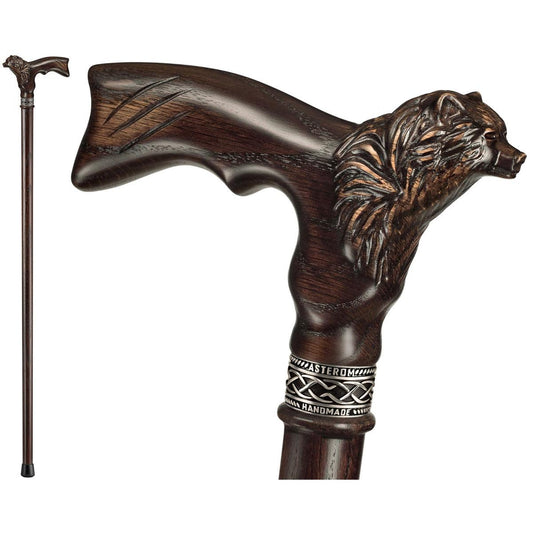
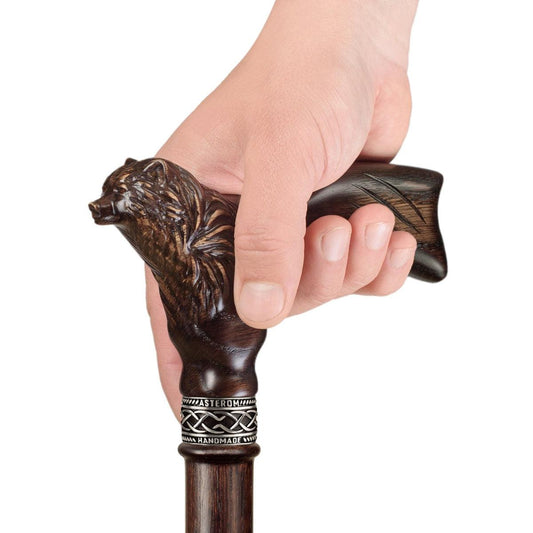
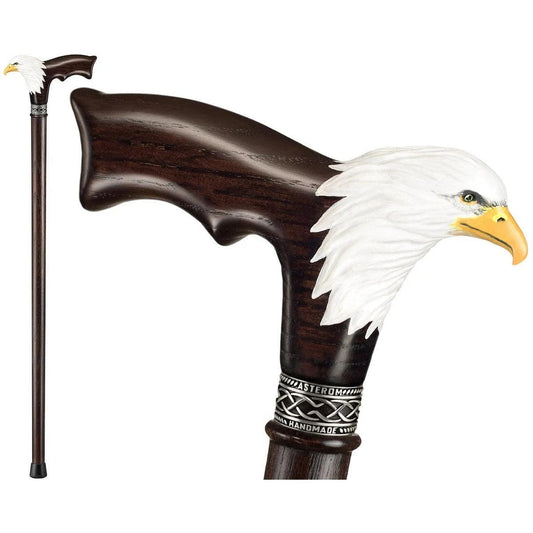
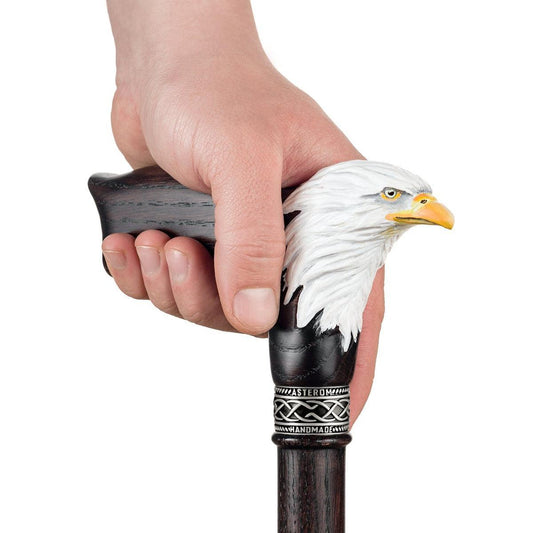
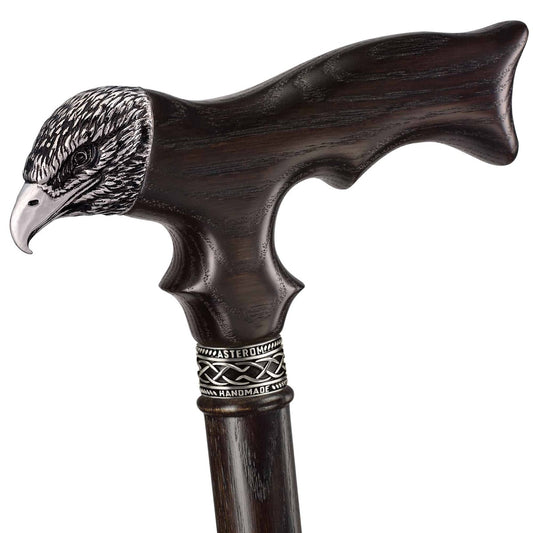
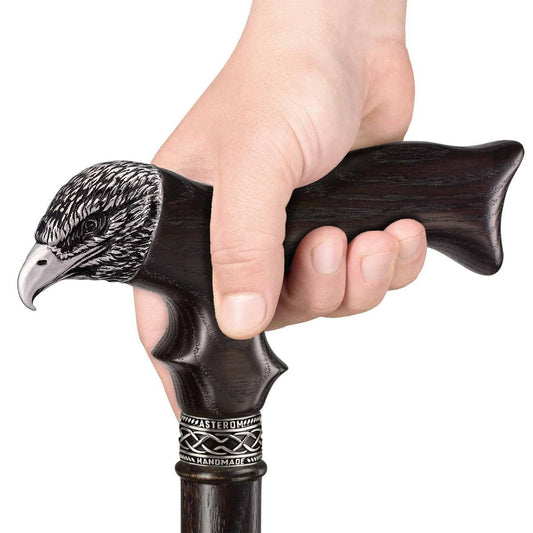
Animal heads carved from hardwood or cast in brass also became popular, with lions, eagles, bulldogs, horses, and hunting dogs appearing on canes owned by sportsmen, military officers, and collectors. These designs allowed owners to express their interests and personalities without saying a word. That tradition continues today in pieces such as our Hand Carved Lion Walking Stick, which celebrates one of history's most enduring symbols of strength, courage, and leadership.
Beauty and Function
The finest walking canes were never created solely for display. Their beauty always remained closely connected to their function. A properly balanced cane felt natural in the hand, while carefully fitted ferrules protected the shaft from wear on stone streets and country paths alike.
Craftsmen paid close attention to proportions, ensuring that decorative elements never compromised strength or comfort. Every curve, every joint, and every polished surface reflected generations of accumulated knowledge passed from one maker to the next.
Unlike mass-produced accessories, handcrafted walking canes often developed lasting relationships with their owners. Many were carried daily for decades before being passed down through families as treasured heirlooms. Scratches, polished handles, and worn ferrules became part of each cane's unique story, recording years of faithful service.
Historical Perspective
Many antique walking canes found in museums and private collections remain structurally sound after more than a century. Their longevity reflects the remarkable skill of the craftsmen who selected quality materials, seasoned their timber correctly, and built each cane with care rather than speed.
The Enduring Appeal of Handcrafted Canes
Although manufacturing methods have changed dramatically since the Victorian era, appreciation for handcrafted walking canes has never disappeared. Collectors continue to seek antique examples for their artistry, while modern artisans preserve traditional techniques that value quality over quantity.
Today's finest handcrafted canes remain true to the principles established centuries ago: carefully selected hardwoods, balanced construction, attention to detail, and timeless design. While fashions evolve, genuine craftsmanship never goes out of style.
This enduring commitment to quality helps explain why walking canes continue to captivate collectors, historians, and enthusiasts around the world. More than simple accessories, they remain tangible reminders of an era when even the most practical objects were expected to reflect pride in workmanship.
Yet beautifully crafted canes were not carried only by gentlemen and collectors. Throughout the nineteenth and early twentieth centuries, walking sticks also became symbols of authority, discipline, and leadership, appearing in the hands of military officers, police officials, and public servants across Europe and beyond.
Walking Sticks of Authority: Police, Military, and Public Office
By the late nineteenth century, the walking stick had become far more than a gentleman's accessory. Across Europe and throughout the British Empire, sticks and canes appeared in the hands of military officers, police officials, railway inspectors, judges, and civic leaders. In these roles, they represented authority, discipline, and responsibility rather than personal fashion.
This evolution was hardly surprising. For centuries, staffs had served as symbols of leadership. Ancient rulers carried ceremonial staffs to signify power, while medieval officials bore rods of office as visible signs of legal authority. The Victorian era simply continued this long tradition in new forms.

The Swagger Stick
Perhaps the best-known military walking stick was the swagger stick. Compact, lightweight, and carried rather than leaned upon, it became a familiar sight among officers throughout Britain and many other European nations during the nineteenth and early twentieth centuries.
Despite its name, the swagger stick was never intended as a weapon. Instead, it formed part of an officer's uniform, symbolizing confidence, discipline, and professional pride. Officers often carried them during inspections, parades, and ceremonial duties, reinforcing the image of calm authority expected from military leadership.
Swagger sticks varied considerably in design. Some were simple polished canes made from rattan or hardwood, while others featured silver or brass fittings engraved with regimental insignia. Presentation swagger sticks were sometimes gifted to officers to commemorate promotions, retirements, or distinguished service.
Police and Civic Officials
Walking sticks also became associated with law enforcement and public administration. During the nineteenth century, many police officers, constables, and inspectors carried short batons or ceremonial sticks that reflected both their authority and their responsibilities. These items evolved from much older traditions in which officials carried staffs to identify themselves as representatives of the law.
Outside policing, civic officials frequently carried ceremonial staffs during public processions, legal ceremonies, and municipal events. Maces, rods of office, and ceremonial canes all reflected the same enduring idea: a staff could symbolize leadership just as effectively as a crown or a uniform.
Railway inspectors, gamekeepers, estate managers, and customs officials were also frequently depicted carrying walking sticks while performing their duties. In these settings, the cane was a practical tool for long days spent on foot while also reinforcing the wearer's professional role.
A Universal Symbol of Leadership
The association between walking sticks and authority extended well beyond Britain. Across Europe, military academies, royal courts, and government institutions adopted ceremonial canes or staffs as part of official dress. Although styles differed from country to country, the underlying symbolism remained remarkably consistent.
A walking stick suggested maturity, responsibility, and measured judgment. It communicated authority without requiring elaborate displays of rank. This quiet symbolism helped explain why so many respected public figures continued carrying walking sticks even when they had no practical need for support.
Historical Perspective
The ceremonial use of staffs and walking sticks stretches back thousands of years. From the sceptres of ancient rulers to the swagger sticks of Victorian officers, these objects consistently represented leadership, responsibility, and public trust rather than physical power.
Respect Rather Than Intimidation
What makes this chapter of walking cane history particularly interesting is how consistently these objects represented restraint. Whether carried by an army officer, a magistrate, or a senior civil servant, the cane projected dignity rather than aggression. It reflected confidence rooted in experience, discipline, and professionalism.
This same principle also defined the gentleman's walking cane. Throughout the nineteenth century, the finest canes communicated refinement and character rather than wealth alone. Their owners appreciated quality craftsmanship, but they also understood that true authority rarely required dramatic displays.
It is perhaps no coincidence that many of history's most recognizable public figures chose to carry walking sticks. Politicians, writers, explorers, military leaders, and statesmen often appeared with carefully selected canes that became almost as recognizable as the individuals themselves.
Some carried them for practical reasons. Others appreciated their craftsmanship. Many simply regarded them as part of their public image. Together, they helped transform the walking cane from an everyday accessory into an enduring historical icon.
Among these remarkable individuals were presidents, prime ministers, celebrated authors, and pioneering adventurers whose walking sticks remain instantly recognizable today. Their stories reveal how the humble cane became a lasting symbol of confidence, character, and personal identity.
Famous Figures Who Made the Walking Cane Iconic
Throughout history, the walking cane has appeared in the hands of kings, explorers, statesmen, authors, inventors, and military leaders. Sometimes it offered practical support. At other times it reflected personal style, authority, or tradition. Whatever the reason, these men helped cement the walking cane's place as one of history's most enduring accessories.
Although popular culture often associates famous walking canes with mystery or hidden weapons, the historical reality is considerably more refined. For most notable figures, the cane represented dignity, craftsmanship, and individuality rather than conflict. Their choices reflected the same values that had defined quality walking sticks for centuries.

Image 14: A museum-style collage featuring Edward William Barton-Wright, Theodore Roosevelt, Winston Churchill, Arthur Conan Doyle, and Mark Twain, each shown with a period-appropriate walking cane.
Edward William Barton-Wright
No individual is more closely associated with the historical concept of the self-defence walking cane than Edward William Barton-Wright. Although his Bartitsu Academy operated for only a brief period, its influence extended far beyond Victorian London.
Barton-Wright recognized something that many gentlemen already understood intuitively: the walking cane was an everyday companion. His contribution was not inventing the cane itself, but demonstrating that an object already carried by respectable citizens could form part of a broader philosophy of civilian self-defence. More than a century later, historians continue to study Bartitsu as one of the earliest attempts to combine Eastern and Western martial traditions into a unified system.
Theodore Roosevelt
Few world leaders embodied physical energy quite like Theodore Roosevelt. An enthusiastic outdoorsman, soldier, naturalist, and explorer, Roosevelt often appeared carrying walking sticks during hunting expeditions, diplomatic journeys, and public appearances.
His canes reflected practicality rather than ceremony. Whether exploring wilderness trails or greeting dignitaries, Roosevelt appreciated well-made equipment that combined durability with function. His well-known philosophy of living "the strenuous life" aligned naturally with the dependable simplicity of a quality walking stick.
Winston Churchill
Perhaps no twentieth-century statesman is more closely identified with a walking cane than Winston Churchill. Photographs from his later years frequently show him carrying one during official engagements, country walks, and public appearances.
For Churchill, the cane became an instantly recognizable part of his public image. It conveyed resilience, determination, and quiet confidence during some of the most challenging years of modern history. Even today, a simple silhouette of Churchill is often recognizable by the combination of his hat, cigar, and walking stick.
Mark Twain
Samuel Langhorne Clemens, better known as Mark Twain, possessed a deep appreciation for distinctive personal style. In his later years he frequently carried elegant walking sticks that complemented his famous white suits and unmistakable appearance.
Twain's canes reflected his personality as much as his wardrobe. They projected wit, sophistication, and individuality while reinforcing the image that readers around the world associated with one of America's greatest authors.
Sir Arthur Conan Doyle
Although Sir Arthur Conan Doyle is remembered primarily as the creator of Sherlock Holmes, his contribution to walking cane history comes through literature rather than personal fashion. His famous reference to "baritsu" in The Adventure of the Empty House preserved the name of Barton-Wright's remarkable system long after the original academy had closed.
For decades, readers puzzled over the mysterious term until historians rediscovered the original Bartitsu movement during the late twentieth century. In an unexpected way, Doyle helped ensure that the historical relationship between the gentleman's walking cane and Victorian self-defence would never be entirely forgotten.
Historical Perspective
History remembers these figures not because they carried walking canes, but because their canes became part of larger stories about leadership, exploration, literature, innovation, and public service. The walking stick complemented their identities—it did not define them.
A Lasting Symbol of Character
The remarkable variety of people who carried walking canes demonstrates just how versatile these objects became throughout history. Presidents valued them for practicality. Statesmen appreciated their quiet dignity. Authors embraced their individuality. Military officers adopted them as symbols of authority, while collectors admired the extraordinary craftsmanship they represented.
One such example is our President Abraham Lincoln Walking Cane, created to honour one of history's most recognizable statesmen. Inspired by Lincoln's enduring legacy of leadership and integrity, it reflects the same appreciation for history and craftsmanship explored throughout this article.
Despite these differences, one common thread unites them all. The walking cane consistently reflected qualities that society admired: confidence without arrogance, elegance without excess, and craftsmanship without compromise.
That enduring appeal explains why handcrafted walking canes continue to captivate collectors and enthusiasts today. Although their everyday role has evolved over the centuries, their ability to combine beauty, history, and practical function remains unchanged.
From the shepherd's staff of the ancient world to the polished cane of the Victorian gentleman, from Bartitsu to blackthorn shillelaghs, from military swagger sticks to museum-quality antiques, the walking cane has travelled an extraordinary historical journey. Its connection with self-defence represents only one chapter in a story that spans thousands of years—a story still being appreciated by craftsmen, historians, collectors, and walking cane enthusiasts around the world.
Conclusion: More Than a Walking Stick
History often reveals itself through the ordinary objects people leave behind.
A pocket watch tells us about craftsmanship. A fountain pen reminds us of diplomacy and literature. A well-worn leather satchel speaks of generations of travel. The walking cane belongs among these timeless possessions—objects whose true significance extends far beyond their practical purpose.
For thousands of years, people have carried wooden staffs and walking sticks for countless reasons. They accompanied shepherds across open fields, guided pilgrims along sacred roads, supported travellers on difficult journeys, and stood beside kings as symbols of authority. Long before the Victorian gentleman ever stepped onto London's cobbled streets with an elegant cane in hand, the walking stick had already earned its place as one of humanity's oldest and most dependable companions.
The nineteenth century added another fascinating chapter to that story. As swords gradually disappeared from everyday civilian life, the walking cane emerged as a symbol of confidence, refinement, and good character. Changing social conditions, growing cities, and the work of pioneers such as Edward William Barton-Wright helped create the historical connection between certain walking canes and personal protection—a connection that continues to capture the imagination of historians and collectors today.
Yet this association represents only a small part of the walking cane's remarkable legacy.
The true history of the walking cane is a story of craftsmanship, culture, and personal expression. It is found in the patient work of artisans who carefully selected hardwoods and shaped them by hand. It lives in the traditions of Irish blackthorn makers, the elegant discipline of French La Canne, the ingenuity of Victorian sword cane makers, and the beautifully balanced canes carried by gentlemen throughout Europe for generations.
Every antique walking cane displayed in a museum and every handcrafted cane produced by skilled makers today carries that history forward. Each represents generations of accumulated knowledge, thoughtful design, and an appreciation for objects built not simply to serve a purpose, but to last a lifetime.
Perhaps that explains why walking canes continue to fascinate us more than a century after their golden age. They connect us to an era when craftsmanship mattered, when personal possessions reflected individual character, and when even the simplest everyday object could tell an extraordinary story.
Whether admired as works of art, collected as historical treasures, or carried as trusted companions, walking canes remain enduring symbols of elegance, resilience, and timeless craftsmanship. Their association with self-defence may have inspired this journey through history, but it is the remarkable story behind the cane itself that continues to captivate us.
If this article has sparked your interest in the rich history of handcrafted walking canes, explore our collection of handcrafted wooden walking canes, where traditional craftsmanship and timeless design continue to inspire every piece. Every cane tells a story—and every story begins with a single step.
Frequently Asked Questions
Were walking canes really used for self-defence?
Yes, some historical walking canes were associated with personal protection, particularly during the nineteenth and early twentieth centuries. In rapidly growing cities such as Victorian London, respectable gentlemen often carried sturdy walking canes as part of their everyday attire. While the vast majority were simply practical accessories, systems such as Bartitsu explored how an ordinary walking cane might serve in exceptional circumstances. Most canes, however, were carried for comfort, style, and craftsmanship rather than self-defence.
What is Bartitsu?
Bartitsu was a civilian self-defence system founded in London by Edward William Barton-Wright in 1898. It combined Japanese jujutsu with English boxing, French savate, and European stick-fighting traditions. Although the original Bartitsu Club operated for only a few years, it became famous through its historical connection with Sherlock Holmes and remains an important part of martial arts history.
What is La Canne?
La Canne is a French discipline that developed during the nineteenth century using lightweight canes. Influenced by classical fencing and closely associated with savate, it eventually evolved into an organized sport. Today it is practiced primarily as a competitive discipline and a way of preserving an important part of France's historical and cultural heritage.
What is an Irish shillelagh?
A shillelagh is a traditional Irish walking stick, most commonly crafted from blackthorn wood. Known for its natural strength and distinctive appearance, the shillelagh became an enduring symbol of Irish heritage and craftsmanship. While folklore often links it with historical stick-fighting traditions, it also served as an everyday walking stick and remains highly valued by collectors and artisans today.
Were sword canes common?
No. Although sword canes have become famous through literature and film, they represented only a small part of walking cane history. Most gentlemen carried conventional wooden canes designed for elegance and everyday use. Sword canes were specialty items admired for their craftsmanship and mechanical ingenuity rather than common accessories.
Why did Victorian gentlemen carry walking canes?
Walking canes were practical, fashionable, and socially appropriate. Victorian gentlemen often walked considerable distances through cities where streets were uneven and crowded. A well-made cane provided comfort while also reflecting personal style, refinement, and social standing. Carrying a cane became as natural as wearing a hat or gloves.
Why did walking canes replace swords?
During the seventeenth and eighteenth centuries, changing fashions and stricter attitudes toward carrying weapons led many gentlemen to abandon everyday swords. The walking cane gradually became the preferred accessory because it retained an air of dignity and refinement while remaining entirely appropriate for polite society.
What woods were traditionally used to make walking canes?
Historic walking canes were crafted from a wide variety of hardwoods depending on regional traditions and personal preference. Popular choices included blackthorn, oak, ebony, walnut, rosewood, hickory, and imported Malacca. Skilled craftsmen selected each species for its balance of strength, durability, flexibility, and natural beauty.
Why are antique walking canes so collectible?
Collectors value antique walking canes for their craftsmanship, historical significance, and individuality. Many feature hand-carved handles, precious metal fittings, exotic hardwoods, or unique designs that reflect the fashions and traditions of their time. Because many were handmade, no two antique canes are exactly alike.
Are handcrafted walking canes still made today?
Yes. Skilled artisans around the world continue to produce handcrafted walking canes using many of the same traditional techniques employed for generations. Carefully selected hardwoods, hand carving, and attention to detail ensure that today's finest canes continue a long tradition of quality craftsmanship while celebrating the rich history of the walking stick.